AI-Native Manufacturing ERP
Built as an agentic operations platform for modern manufacturers, this ERP brings core manufacturing workflows into a unified system while using AI agents to automate repetitive tasks, surface operational insights, and help teams make faster decisions.
Disconnected Operations & Manual Manufacturing Workflows
Manufacturing teams relied on disconnected systems, spreadsheets, manual follow-ups, and fragmented operational data, making it difficult to maintain real-time visibility across production, inventory, procurement, sales, and finance.
- Production, inventory, procurement, and finance data was fragmented across multiple systems and spreadsheets.
- Teams spent significant time manually tracking stock levels, purchase requirements, production progress, and operational exceptions.
- Managers lacked a unified real-time view of operations, making it difficult to identify bottlenecks and act before problems escalated.
Agentic AI-Native Manufacturing Operating System
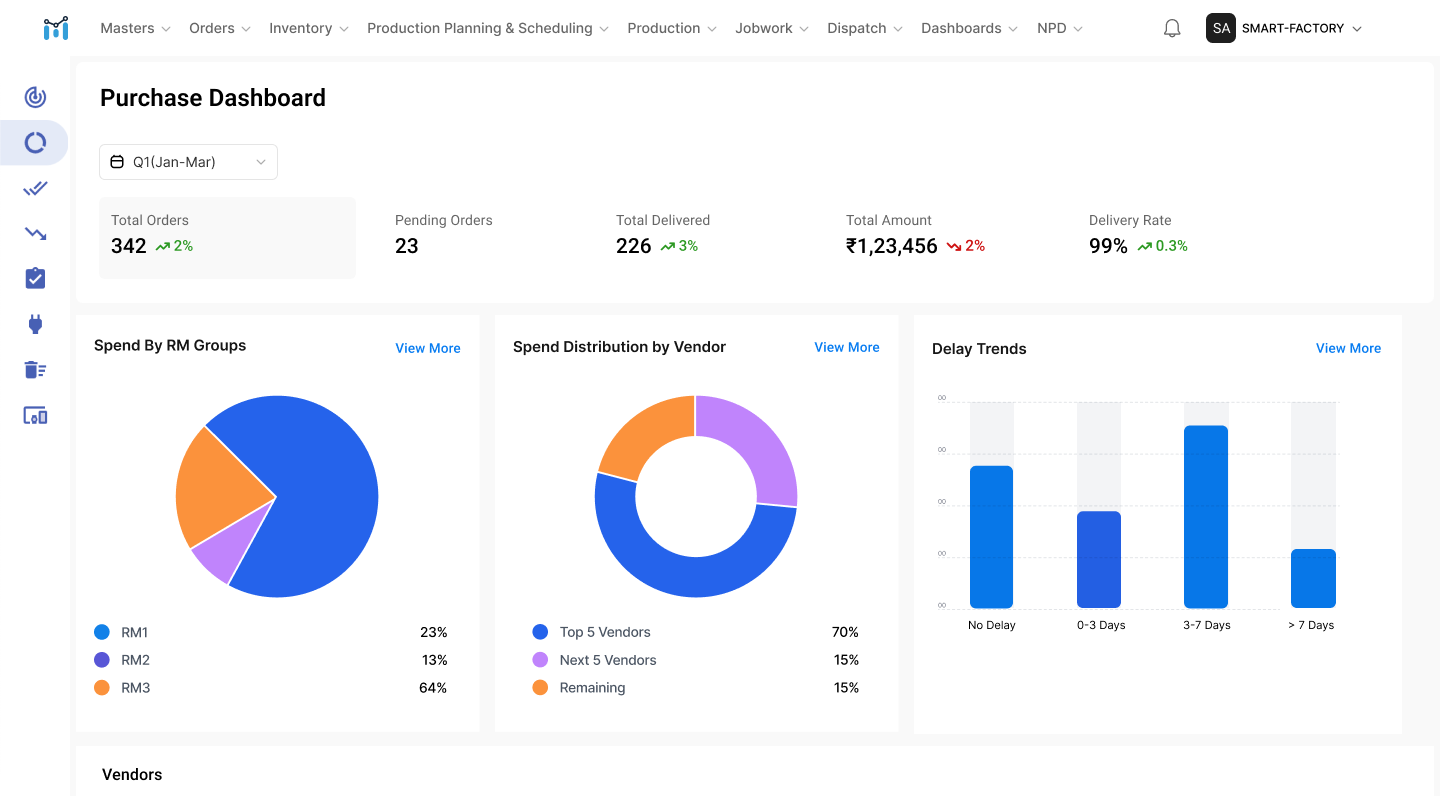
Kalkin Labs engineered an AI-native ERP that unifies core manufacturing operations and adds intelligent agents capable of monitoring workflows, identifying exceptions, generating insights, and assisting teams with operational decisions.
- Unified operational data layer connecting sales, inventory, procurement, production, and finance workflows.
- AI agents continuously monitor business activity, identify anomalies, and surface actionable operational insights.
- Automated workflows reduce repetitive coordination, follow-ups, data entry, and manual reporting across departments.
Key Features
Unified Manufacturing Operations
Connects sales orders, inventory, procurement, production, dispatch, and finance into a single operational system.
AI Operations Agent
Monitors operational data, identifies exceptions, answers business questions, and surfaces issues that require attention.
Production & Inventory Intelligence
Provides real-time visibility into production status, stock levels, material requirements, and operational bottlenecks.
Automated Workflow Orchestration
Automates repetitive operational workflows, alerts, approvals, follow-ups, and cross-department coordination.
How It Works
Operational Data Capture
Sales, inventory, procurement, production, and finance activities are captured in a centralized operational data layer.
Workflow Processing
Business rules and automated workflows process transactions, update operational states, and trigger relevant actions.
AI Monitoring & Reasoning
AI agents analyze operational activity to identify anomalies, bottlenecks, risks, and opportunities across the business.
Action & Decision Support
The system generates alerts, recommendations, reports, and automated actions while routing decisions requiring human approval to the right team.
About This Project
Write a detailed overview of this project here. Explain what the project is, who it was built for, what business problem it addresses, and why the system was needed.
Use this space to explain the background of the project and provide more context that does not fit into the short overview above. You can describe the client, industry, workflow, users, and the goals of the project.
What We Built
Explain the actual system that was built here. Describe the major components, workflows, dashboards, automations, integrations, or AI capabilities included in the project.
You can also explain how the different parts of the system work together and what the user is able to accomplish with the final product.
Business & Technical Context
Add more information about the technical architecture, tools, technologies, integrations, or implementation decisions here. This is a good place to explain the engineering approach without making the main project overview too technical.
You can also explain why particular technologies or architectural decisions were selected and how they helped solve the client's operational requirements.
Project Outcome
Describe the final outcome of the project here. Explain what changed for the client after the system was implemented, what processes became easier, and what operational improvements the solution delivered.
Interface Gallery
Demo Walkthrough
Click to launch interactive system preview
High-definition video walkthrough & workflow trace (02:45)
Qualitative Outcome & Operational Results
Created a unified AI-native operating layer that gives manufacturing teams real-time operational visibility while reducing manual coordination and repetitive workflows.
Unified production, inventory, procurement, sales, and finance operations in one system
AI agents continuously monitor operations and surface actionable exceptions and insights
Reduced manual coordination, reporting, and repetitive operational workflows across teams
Ready to build custom AI or software systems for your business?
Partner with Kalkin Labs to design, engineer, and deploy high-velocity operational software tailored to your workflows.